

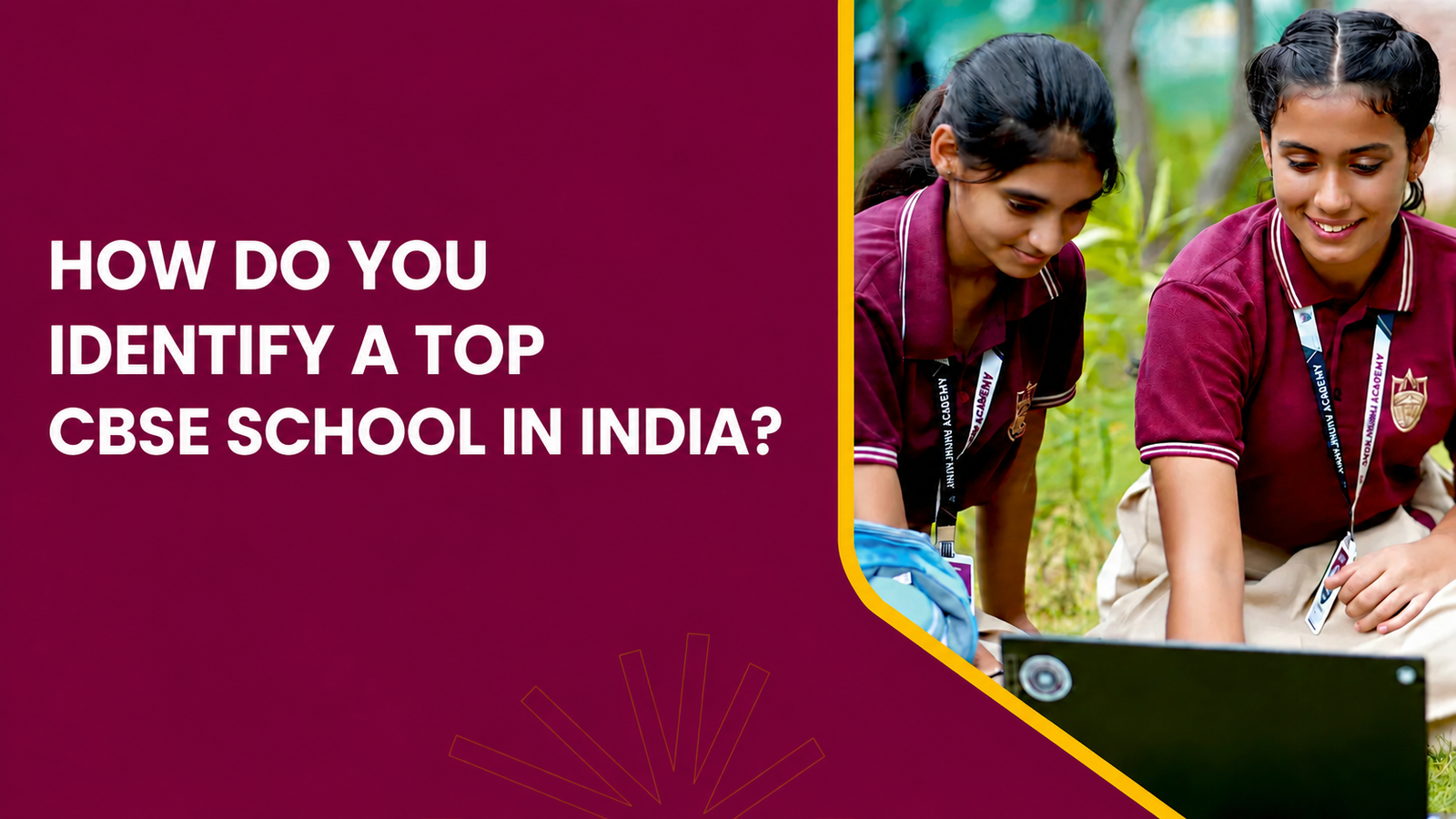
Choosing the right school is one of the most important decisions parents make for their child’s future. With numerous CBSE schools in India, identifying the right option requires more than checking board results or school rankings. Parents should consider academic quality, teaching methods, infrastructure, safety, extracurricular opportunities, and overall student development. Understanding how to identify a top CBSE school in India can help families make a practical and informed decision. The right school should provide a balanced environment where students can learn, explore their interests, develop essential skills, and prepare confidently for future academic and personal challenges.
What Makes a CBSE School Truly Top-Rated?
A top-rated school is not defined by one achievement or facility. Instead, several factors work together to create a strong educational environment. Parents exploring the best CBSE schools in India should consider the following aspects:
- Strong Academic Foundation: A quality school should have a structured curriculum, effective assessment methods, academic guidance, and teaching practices that encourage conceptual understanding.
- Qualified Faculty: Experienced and knowledgeable teachers can make difficult concepts easier to understand while providing individual attention and meaningful feedback.
- Holistic Development: Education should include sports, arts, cultural activities, communication, leadership, teamwork, and other opportunities beyond traditional classroom learning.
- Modern Learning Environment: Well-equipped classrooms, laboratories, libraries, technology-enabled learning spaces, and activity areas can support different learning styles.
- Student-Centric Approach: The best schools focus on individual student needs and create an environment where children feel encouraged to ask questions, experiment, collaborate, and learn from mistakes.
A school such as Modi School can be evaluated through these same parameters rather than simply judging it by its name or reputation.
Academic Excellence: Beyond Just Board Results
Academic performance is naturally important when parents are searching for the top CBSE schools in India, but board examination results should not be the only measure of educational quality. A genuinely effective school should focus on how students learn, understand, apply, and retain knowledge.
Concept-Based Learning
A strong CBSE school should encourage students to understand concepts instead of depending entirely on memorisation. Concept-based learning helps children connect classroom knowledge with practical situations and develop problem-solving abilities. Parents should observe whether teachers encourage questions, discussions, reasoning, and application-based learning. Schools that follow this approach can help students develop a stronger academic foundation for higher classes and competitive examinations.
Curriculum Implementation
The CBSE curriculum provides a structured framework, but its effectiveness depends significantly on how a school implements it. A good school should combine textbook learning with projects, practical activities, classroom discussions, assessments, and real-world examples. Parents considering what makes a CBSE school one of the best in India should therefore look at the actual learning experience rather than focusing only on the curriculum name.
Assessment & Feedback
Regular assessment allows teachers to understand student progress and identify areas requiring improvement. A balanced assessment system may include tests, assignments, projects, classroom participation, and periodic evaluations. Constructive feedback is equally important because it helps students understand their mistakes and improve gradually. Parents should ask how the school tracks academic performance and whether additional support is available when a student faces difficulties.
Academic Support
Students have different learning speeds, strengths, and challenges. A quality school should provide suitable academic support through doubt-solving sessions, mentoring, additional practice, remedial guidance, or individual attention where required. This approach ensures that students who struggle with a particular concept do not feel left behind. Effective academic support can also help high-performing students explore subjects in greater depth.
Teachers, Teaching Methods & Learning Support
Qualified & Experienced Teachers
Teachers are central to the quality of education. Parents should consider their academic qualifications, subject knowledge, teaching experience, communication skills, and ability to manage different learning needs. Experienced educators can often identify where students need additional guidance and adapt explanations accordingly. When comparing reputed CBSE schools in India, parents should pay close attention to the faculty because strong infrastructure cannot replace effective teaching.
Interactive Teaching Methods
Modern students benefit from classrooms where learning is interactive rather than limited to lectures and note-taking. Discussions, demonstrations, projects, experiments, presentations, digital resources, and problem-solving activities can make lessons more engaging. Parents asking how to choose the best CBSE school in India should understand whether students actively participate in classroom activities and whether teaching methods encourage curiosity, independent thinking, and practical application of knowledge.
Individual Learning Support
Every child has a different learning style and pace. A supportive school should recognise these differences and provide appropriate guidance whenever students require additional help. Teachers can use individual feedback, practice exercises, doubt-solving sessions, and mentoring to address learning gaps. Such support can improve confidence and prevent students from feeling discouraged when they find a particular subject or concept difficult.
Mentoring & Parent Communication
A strong connection between teachers, students, and parents can improve the overall educational experience. Regular parent-teacher meetings, academic updates, progress discussions, and constructive feedback allow families to understand how their child is performing. Mentoring can also help students set realistic goals and develop better study habits. Parents should ask how the school communicates progress and handles academic or behavioural concerns.
Campus, Infrastructure & Modern Facilities
Smart Classrooms
Technology can make classroom education more visual, interactive, and engaging when used appropriately. Smart boards, digital learning resources, multimedia presentations, and educational applications can support teachers in explaining complex topics. Parents evaluating what facilities should a top CBSE school offer should look beyond the presence of technology and understand whether these tools are regularly integrated into meaningful classroom learning.
Science Laboratories
Practical experiments help students understand scientific concepts through observation and application. Well-equipped laboratories provide opportunities to conduct experiments, analyse results, and develop curiosity. Parents should check whether students receive regular access to laboratories and whether practical learning is included as part of the academic experience. This can be particularly valuable as students progress towards advanced science subjects.
Computer & Technology Facilities
Digital literacy has become an important part of modern education. Computer laboratories and technology-enabled learning environments can help students develop research, digital communication, problem-solving, and technology skills. A forward-looking Modi World School approach to education may be evaluated by how effectively technology is combined with classroom teaching rather than simply by the number of devices available.
Library & Reading Resources
A well-maintained library can encourage students to read beyond their textbooks. Books, reference material, periodicals, digital resources, and dedicated reading spaces can support independent learning and improve comprehension. Parents should check whether students are encouraged to use the library regularly. A strong reading culture can contribute to vocabulary development, general awareness, communication skills, and a lifelong interest in learning.
Sports & Activity Facilities
Sports and physical activities are important for maintaining fitness while developing teamwork, discipline, coordination, and leadership. Schools should provide students with suitable opportunities to participate in different sports and recreational activities. Parents comparing leading CBSE schools in India should consider whether students have enough time, space, and encouragement to participate in physical activities alongside their academic responsibilities.
Safety, Discipline & Student Well-Being
Campus Safety
Student safety should be a fundamental consideration during CBSE school selection. Parents should understand the school’s procedures for campus entry, supervision, emergency situations, transportation, activity areas, and general security. A safe environment allows children to concentrate on learning and participate confidently in school activities. Parents should also ask how safety procedures are communicated to students and staff.
Positive Discipline
Discipline should teach students responsibility, respect, and accountability rather than relying primarily on fear or punishment. Clear rules and consistent expectations help students understand appropriate behaviour. Schools should also provide constructive guidance when behavioural concerns arise. Parents should understand the school’s disciplinary philosophy and determine whether it creates a balanced environment that supports both responsibility and student well-being.
Emotional & Social Well-Being
Academic performance is only one part of a child’s development. Students also need support with confidence, communication, relationships, stress, and social challenges. A supportive school environment encourages students to express concerns and seek guidance when needed. Teachers, mentors, and appropriate student-support systems can help children develop resilience, emotional awareness, communication skills, and healthy relationships with peers.
Parent-School Communication
Parents should have accessible and transparent communication channels with teachers and school management. Regular interactions can help identify academic, behavioural, or social concerns at an early stage. Effective communication also allows parents to understand classroom participation and overall progress. Schools that encourage constructive collaboration with parents can create a stronger support network around each student.
Healthy School Environment
Cleanliness, hygiene, comfortable classrooms, safe activity areas, and a positive atmosphere contribute to student well-being. Children spend a substantial portion of their day at school, making the physical environment important for both comfort and concentration. Parents visiting a Modi School campus or any other shortlisted school should observe not only the facilities but also how well they are maintained and used.
How Should Parents Compare CBSE Schools?
Knowing how to select the right CBSE school for your child becomes easier when parents use a structured comparison process instead of relying on advertisements or general rankings.
1. Compare Academic Approach
Start by understanding the school’s teaching methodology, assessment system, academic support, curriculum implementation, and learning outcomes. Ask whether the school focuses on conceptual understanding, practical learning, and individual progress rather than only examination preparation.
2. Evaluate Faculty
Teachers can significantly influence a student’s academic experience. Consider faculty qualifications, experience, subject expertise, classroom approach, communication, and accessibility. Ask how teachers support students who require additional help and how they encourage those who are ready for advanced learning.
3. Visit the Campus
A campus visit can reveal important details that may not be visible on a website. Parents should observe classrooms, laboratories, library facilities, sports areas, activity spaces, cleanliness, safety arrangements, and the overall atmosphere. Seeing students and teachers interact can also provide useful insights into the school’s environment.
4. Check Beyond-Academic Opportunities
Ask about sports, clubs, competitions, cultural activities, projects, leadership programmes, public speaking, creative activities, and other opportunities. These experiences can help children develop confidence, teamwork, communication, creativity, and leadership skills alongside academics.
5. Understand Safety & Student Support
Parents should ask about campus security, transportation safety, supervision, emergency procedures, discipline, student support, and communication with families. These areas are essential because children need to feel safe and supported before they can fully engage with learning.
6. Consider Your Child’s Individual Needs
There is no single definition of the best CBSE school in India for every child. Parents should consider their child’s interests, academic strengths, learning preferences, extracurricular interests, personality, commute, and future plans. The ideal school should match these needs while providing opportunities for the child to grow in multiple areas.
7. Compare Value, Not Just Facilities
A school may offer impressive infrastructure, but parents should understand whether those facilities genuinely contribute to student learning and development. Compare academic support, faculty quality, activities, safety, teaching practices, and student outcomes along with infrastructure. This broader approach can make the final decision more practical.
FAQs
What makes a CBSE school a top school in India?
A top CBSE school combines academic quality, experienced teachers, effective teaching methods, modern infrastructure, student support, safety, sports, extracurricular activities, and opportunities for holistic development. Parents should assess these factors together instead of using board results as the only indicator.
How can parents choose the right CBSE school?
Parents can shortlist schools based on academic approach, faculty, infrastructure, safety, activities, student support, location, and their child’s individual needs. Visiting the campus and asking specific questions about teaching and student development can help families make a more informed choice.
What should parents check before choosing a CBSE school?
Parents should check the school’s curriculum implementation, faculty, teaching methodology, classrooms, laboratories, library, sports facilities, safety systems, student support, extracurricular opportunities, assessment practices, and parent communication. They should also determine whether the school environment matches their child’s learning needs.
What facilities should a top CBSE school offer?
A quality school should ideally provide well-equipped classrooms, science and computer laboratories, library resources, sports facilities, activity spaces, technology-enabled learning tools, and appropriate safety infrastructure. However, the usefulness and maintenance of these facilities matter more than simply having a long list of amenities.
Why is CBSE curriculum popular in India?
The CBSE curriculum offers a structured academic framework and is widely recognised across India. Its broad acceptance can be particularly useful for families who relocate between cities or states. It also provides a consistent educational structure for students moving between CBSE-affiliated schools.
How important are teachers when choosing a CBSE school?
Teachers are one of the most important factors. Their subject knowledge, communication skills, teaching methods, mentoring ability, and understanding of different learning needs directly influence classroom experiences and student confidence. Strong faculty should therefore be a major consideration during school selection.
Conclusion
Identifying a top CBSE school in India requires a comprehensive evaluation rather than dependence on rankings, advertisements, or examination scores alone. Parents should consider academics, teachers, teaching methods, infrastructure, technology, safety, student well-being, sports, extracurricular activities, and individual learning support. The right school should create an environment where children can perform academically while developing confidence, creativity, communication, discipline, and essential life skills. For families evaluating their options, Modi World School – Wisdom City can be considered alongside other schools based on these important academic, infrastructural, and developmental parameters.
📞 Admissions Open! Enroll now to shape your child’s bright future with us.
📲 Call: +91-7240372409
📍 Address: Modi World School, Wisdom City, Near Khemi Shakti Temple, Samaspur Road, Jhunjhunu, Rajasthan – 333001
#ModiWorldSchool #CBSESchoolInIndia #BestBoardingSchool #TopBoardingSchool #BestSchoolInIndia #CBSEBoardingSchool #AdmissionsOpen #QualityEducation #BoardingSchoolIndia #ResidentialSchool #FutureReadyEducation #BoardingSchoolLife #TopCBSERajasthan #ModernEducation #CBSEIndia #SchoolAdmissions