

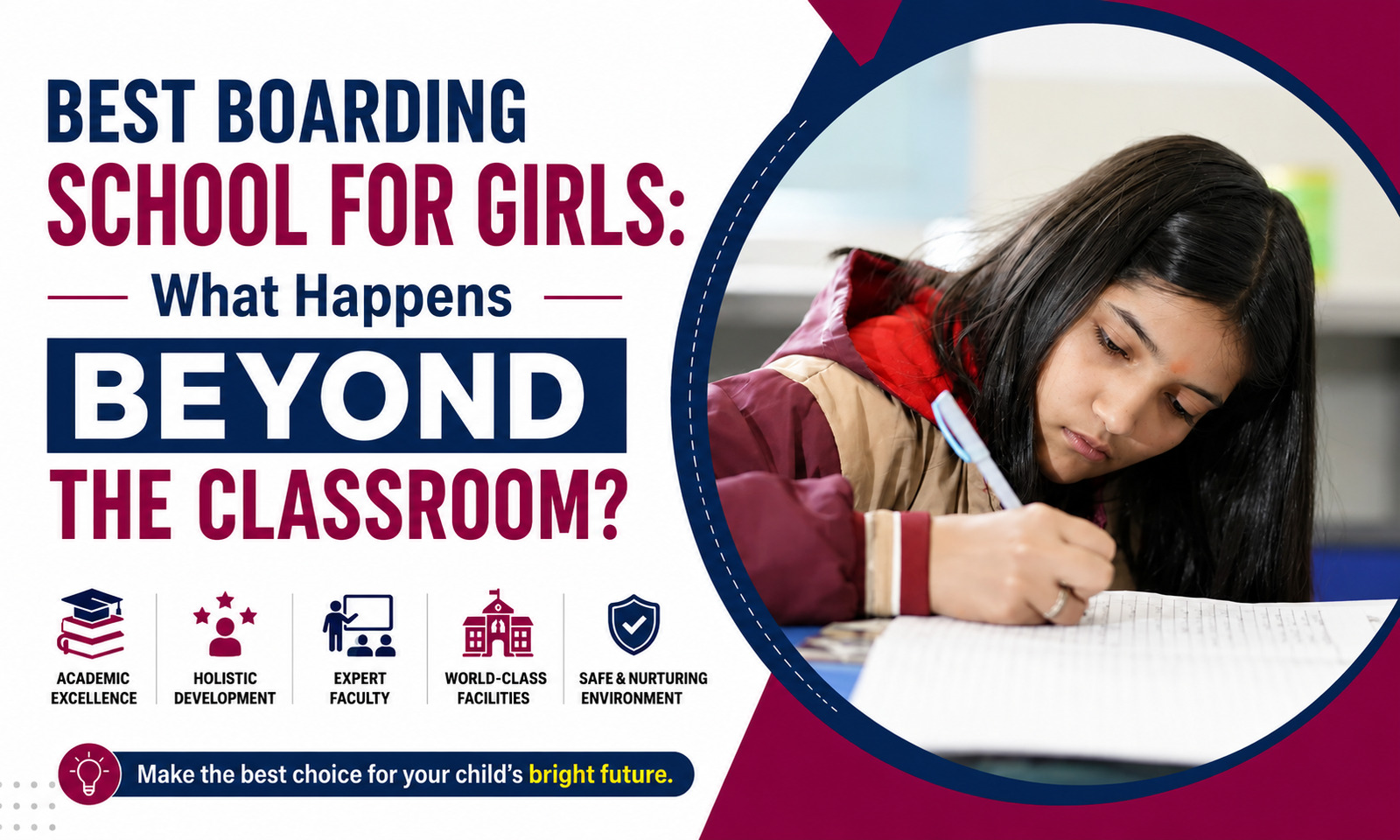
Choosing a Best Boarding School for Girls is not only about academic performance, examination results, or classroom teaching. A good residential environment gives students opportunities to learn through sports, activities, teamwork, responsibilities, competitions, and everyday experiences. These experiences can influence confidence, independence, communication, discipline, and decision-making. This is why parents should understand what happens beyond regular lessons when evaluating a boarding school for girls. The right environment can support academic progress while also contributing to the overall development of girls.
What Happens Beyond the Classroom?
What happens beyond the classroom in a boarding school? Students experience a wider learning environment where education continues through daily routines, interactions, activities, and responsibilities. A girls boarding school in India can provide opportunities for students to participate in sports, cultural events, creative activities, group projects, leadership programs, and community-oriented initiatives.
These experiences help students understand practical concepts that cannot always be developed through textbooks. For example, working with classmates can strengthen teamwork, while participating in competitions can teach students how to handle pressure and accept both success and failure.
For many students, boarding education for girls also creates opportunities to become more responsible for their schedules, belongings, assignments, and daily commitments. Such experiences can gradually encourage self-management and adaptability.
Therefore, when parents ask, “What do girls learn outside the classroom?”, the answer goes beyond extracurricular knowledge. They can develop communication, collaboration, confidence, discipline, problem-solving abilities, and social awareness through everyday residential experiences.
What Makes the Best Boarding School for Girls Different?
The Best Boarding School for Girls should provide an environment where academic learning and personal growth work together. A strong school culture does not treat activities outside academics as optional entertainment; instead, these experiences can become an important part of student development.
One important aspect is the quality of the learning environment. Students should have opportunities to explore their interests while receiving appropriate guidance from teachers and mentors. Whether a student enjoys sports, music, public speaking, art, technology, or other activities, exposure to different areas can help her identify strengths and interests.
Another important factor is the residential environment. A residential school for girls can offer students regular opportunities to interact with peers from different backgrounds. Living and learning together can encourage cooperation, patience, communication, and mutual respect.
The best girls boarding school should also encourage students to take responsibility rather than making every decision for them. Age-appropriate responsibilities can help students develop confidence and practical decision-making abilities.
Ultimately, a strong girls residential school combines academics, activities, mentorship, discipline, and everyday experiences to create an environment that supports both education and personal growth.
What Activities Help Girls Build Confidence & Life Skills?
1. Sports and Physical Activities
Sports can play an important role in extracurricular activities in boarding schools. Regular participation can encourage discipline, teamwork, fitness, and perseverance. Students learn to follow rules, cooperate with teammates, and respond positively to both victories and setbacks. Individual sports can also encourage self-discipline and goal-setting, while team sports teach collaboration and communication. For girls, consistent participation in physical activities can also provide opportunities to discover abilities outside academics and develop confidence through measurable progress.
2. Public Speaking and Debates
Public speaking, debates, presentations, and discussions can strengthen communication skills. Students get opportunities to express opinions, organize thoughts, listen to different viewpoints, and respond confidently. Such activities can be particularly useful for personality development for students, because they encourage students to overcome hesitation and communicate in front of others. Regular practice can gradually improve clarity, confidence, vocabulary, and presentation skills. These abilities can remain useful in higher education, interviews, competitions, and professional environments.
3. Cultural Activities
Music, dance, theatre, festivals, and cultural programs allow students to explore creativity and self-expression. Activities for girls in boarding schools can provide a platform where students participate individually as well as in groups. Preparing for performances can teach planning, cooperation, rehearsal discipline, and responsibility. Cultural activities can also introduce students to different traditions and perspectives. This creates opportunities for students to appreciate diversity while developing creative confidence and a stronger sense of participation within their school community.
4. Art and Creative Expression
Drawing, painting, craft, design, photography, writing, and other creative activities can encourage imagination and independent thinking. Not every student expresses herself best through conventional academics, so creative opportunities can help identify different strengths. These activities can also teach patience because meaningful creative work often requires repeated practice and attention to detail. For a boarding school for girls, maintaining creative spaces can provide students with constructive ways to explore interests, manage leisure time, and develop confidence in their individual abilities.
5. Leadership Opportunities
Leadership does not always mean holding a formal position. Students can develop leadership skills for students through house activities, team projects, event coordination, sports teams, clubs, and group responsibilities. Taking responsibility for a task teaches students how to communicate expectations, organize resources, solve problems, and support others. These experiences can help girls understand that leadership involves accountability as much as authority. Gradually, students can become more comfortable making decisions, accepting responsibility for outcomes, and helping their peers achieve shared goals.
6. Team Projects and Group Learning
Team projects can turn ordinary learning into a collaborative experience. Students have to divide responsibilities, communicate deadlines, consider different ideas, and complete a common objective. These activities strengthen teamwork and problem-solving while teaching students that people may approach the same task differently. In a residential environment, such experiences occur regularly through academics, clubs, sports, and events. This makes group learning an important part of holistic education for girls in boarding schools, particularly when students are encouraged to contribute rather than simply follow instructions.
7. Community and Social Activities
Community-oriented activities can help students develop empathy, social awareness, and a sense of responsibility. Participation may include awareness campaigns, volunteering, environmental initiatives, charity activities, or projects connected with local communities. Such experiences can help students understand issues beyond their immediate surroundings. They can also encourage cooperation and responsible citizenship. The benefits of boarding school for girls therefore can extend beyond academic development when students are given meaningful opportunities to understand their role in society and contribute positively to the people around them.
8. Clubs and Interest-Based Activities
Clubs can provide students with a structured way to explore interests that may not receive extensive classroom time. Depending on the school, options may include literature, science, robotics, coding, entrepreneurship, quiz, photography, music, or environmental clubs. Students can discover new interests without the pressure of choosing a permanent career path. Regular participation can encourage curiosity, research, communication, and collaboration. For students receiving girls boarding education, interest-based clubs can make residential life more engaging while supporting exploration and independent learning.
9. Time Management and Daily Responsibilities
Residential life naturally creates opportunities to practice time management. Students may need to balance classes, study periods, activities, meals, rest, and personal responsibilities. Learning to manage these commitments can gradually improve organization and self-discipline. How does boarding life build independence? One answer is through repeated opportunities to manage age-appropriate responsibilities with guidance rather than constant supervision. These everyday routines can prepare students to handle greater responsibilities in higher education and adult life while becoming more aware of how their choices affect their schedules.
10. Problem-Solving and Decision-Making
Students encounter small challenges throughout school life, from completing group assignments to managing activity schedules or resolving disagreements with peers. When students are guided to think through these situations instead of receiving immediate solutions, they can develop practical problem-solving abilities. A well-managed residential environment can provide opportunities for students to make age-appropriate choices while knowing that support is available when required. This balance between independence and guidance is an important part of how boarding schools develop girls beyond academics.
11. Mentoring and Peer Interaction
Mentoring and peer interaction can create an environment where students learn from both adults and classmates. Older students may guide younger students during activities, while teachers and mentors can help students reflect on their experiences. Such relationships can strengthen communication, empathy, cooperation, and confidence. They also help students understand different perspectives. For boarding schools for girls in India, a positive peer culture can make residential education more meaningful by creating opportunities to learn through conversations, collaboration, shared responsibilities, and everyday social experiences.
12. Competitions and Real-World Experiences
Competitions can teach students how to prepare, perform, receive feedback, and improve. Whether the competition involves academics, sports, public speaking, art, technology, or cultural activities, students experience situations where preparation and performance matter. These experiences can strengthen resilience because not every attempt results in success. Learning how to respond to setbacks can be as valuable as celebrating achievements. Such exposure is one reason the benefits of residential education for girls can include stronger adaptability, confidence, persistence, and readiness for future challenges.
How Does Boarding Life Prepare Girls for the Future?
How does boarding school support overall development? A major advantage of residential education is the combination of structured learning and everyday experiences. Students are not only attending classes; they are also learning how to organize their time, communicate with peers, participate in activities, and handle responsibilities.
This environment can encourage independence gradually. Students learn that completing assignments, preparing for activities, maintaining routines, and cooperating with others require consistency. These habits can become valuable when students move into higher education or professional environments.
Residential education can also help students become more adaptable. Living with peers may expose them to different personalities, perspectives, habits, and approaches to problem-solving. Learning to cooperate in such an environment can strengthen interpersonal skills.
For students considering residential education for girls, the focus should therefore be on long-term development rather than only immediate academic outcomes. The right environment can help students build confidence, communication abilities, leadership qualities, resilience, and practical life skills.
In this way, how boarding schools develop girls beyond academics becomes an important consideration for parents looking at long-term educational value.
What Should Parents Look for Beyond Academics?
When evaluating the Best Boarding School for Girls, parents should look beyond examination scores and academic rankings. The residential environment, student support system, activity opportunities, mentoring approach, and overall school culture can have a significant influence on a student’s experience.
Parents should understand what opportunities students receive for sports, arts, leadership, communication, teamwork, and practical learning. They can also consider whether students are encouraged to take age-appropriate responsibilities and develop independence.
Another useful consideration is whether the school creates a balanced routine. Students need adequate time for academics, activities, rest, recreation, and personal development. An excessively academic environment may leave limited opportunities for exploration, while an unstructured environment may not provide enough discipline.
Parents should also understand how teachers and residential staff interact with students. A supportive environment can help students feel comfortable seeking guidance when they face academic, social, or personal challenges.
Finally, parents should consider whether the school’s educational philosophy matches their child’s interests, learning style, personality, and long-term goals. The right boarding school for girls should offer a balanced environment where students can learn, participate, grow, and gradually become more independent.
Conclusion
The real value of a Best Boarding School for Girls extends far beyond textbooks and examinations. Sports, creative activities, leadership opportunities, teamwork, residential responsibilities, competitions, and peer interaction can all contribute to confidence and practical development. These experiences can help students become more independent, adaptable, communicative, and prepared for future challenges.
When parents evaluate a school, they should therefore consider the complete educational experience rather than academics alone. Modi World School – Wisdom City can be considered by families looking for an environment where academic learning is complemented by activities and experiences that support the broader development of girls.
Frequently Asked Questions
1. What happens beyond the classroom in a boarding school?
Beyond academics, students participate in sports, cultural activities, clubs, competitions, leadership programs, group projects, and other experiences that support confidence, communication, teamwork, and life skills.
2. What do girls learn outside the classroom?
Girls can develop practical skills such as time management, teamwork, communication, leadership, decision-making, independence, and problem-solving through activities and residential life.
3. How does boarding school support overall development?
A boarding school combines academics with extracurricular activities, sports, peer interaction, mentoring, and daily responsibilities to support students’ academic, social, emotional, and personal development.
4. What activities are offered in girls boarding schools?
Activities may include sports, music, dance, art, debates, public speaking, clubs, competitions, cultural events, leadership programs, and community-oriented activities, depending on the school.
5. How does boarding life build independence?
Boarding life gives students age-appropriate responsibilities and opportunities to manage routines, schedules, personal belongings, studies, and activities, helping them gradually become more responsible and independent.
6. Why are extracurricular activities important for girls?
Extracurricular activities can help girls build confidence, creativity, teamwork, leadership, communication skills, discipline, and resilience while allowing them to explore interests beyond academics.
7. What are the benefits of boarding school for girls?
Key benefits can include holistic development, stronger independence, improved social skills, leadership opportunities, structured routines, exposure to diverse experiences, and opportunities to participate in various activities.
8. How do boarding schools develop leadership skills?
Students can develop leadership through house activities, clubs, team projects, sports, competitions, event coordination, and other responsibilities that encourage communication, decision-making, accountability, and teamwork.
📞 Admissions Open! Enroll now to shape your child’s bright future with us.
📲 Call: +91-7240372409
📍 Address: Modi World School, Wisdom City, Near Khemi Shakti Temple, Samaspur Road, Jhunjhunu, Rajasthan – 333001
#ModiWorldSchool #CBSESchoolInIndia #BestBoardingSchool #TopBoardingSchool #BestSchoolInIndia #CBSEBoardingSchool #AdmissionsOpen #QualityEducation #BoardingSchoolIndia #ResidentialSchool #FutureReadyEducation #BoardingSchoolLife #TopCBSERajasthan #ModernEducation #CBSEIndia #SchoolAdmissions