

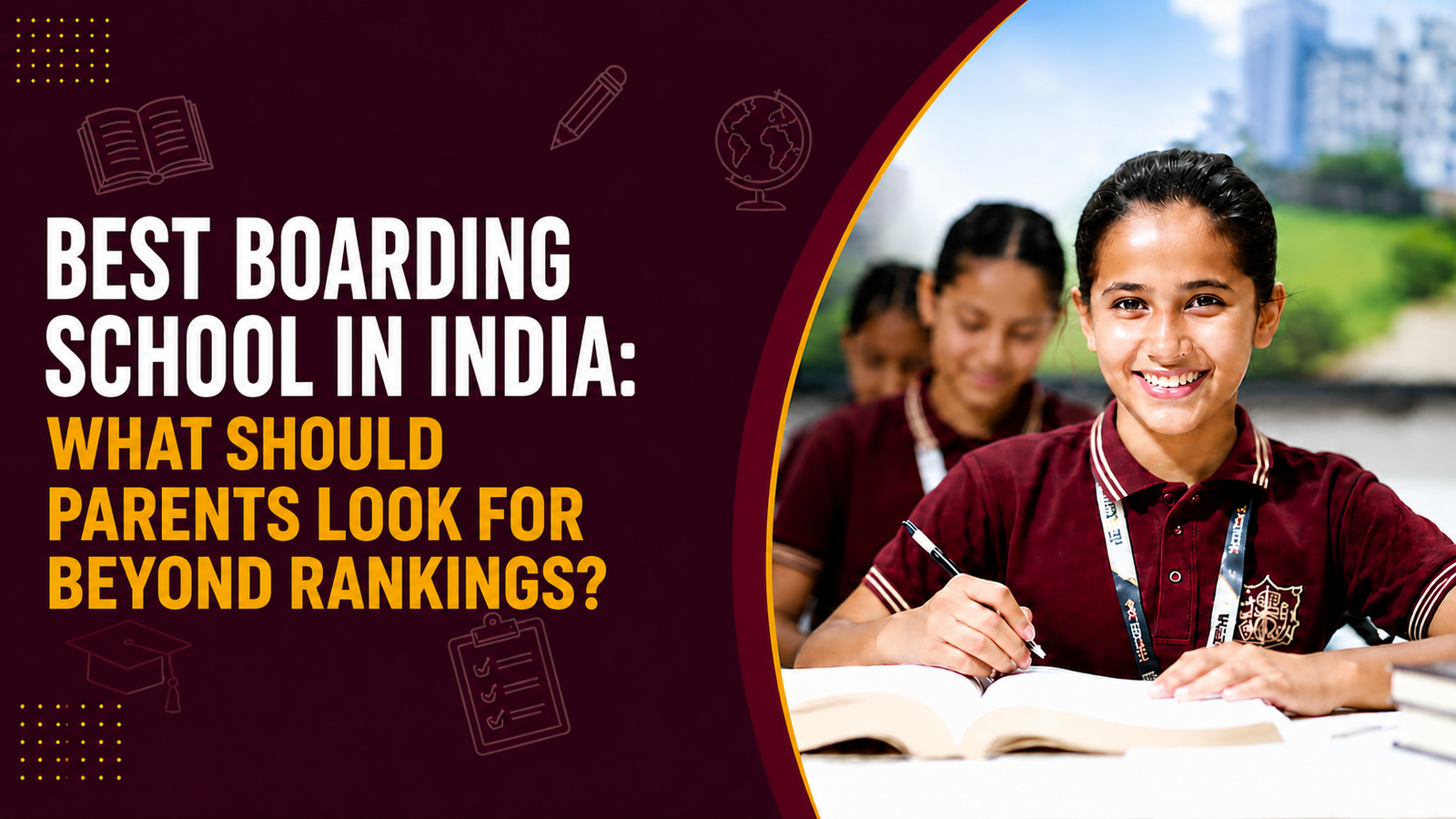
Choosing the Best Boarding School in India is a major decision for parents because a residential school becomes much more than an academic institution. It becomes a place where children study, live, build friendships, develop independence, and discover their interests. While rankings can provide a starting point, they cannot always tell parents whether a school is the right fit for their child. Factors such as academics, faculty, safety, residential life, student well-being, facilities, and holistic development deserve equal attention. So, how do I choose the best boarding school in India? The answer begins with looking beyond rankings and understanding what truly matters for a child’s growth.
What Makes the Best Boarding School in India?
When parents ask, “What makes the best boarding school in India?”, there is no single answer. The right school should provide a balanced environment that supports academic achievement while also developing confidence, discipline, independence, and life skills.
Here are some important qualities parents should evaluate:
1. Strong Academic Foundation
A good boarding school should provide a structured academic environment with qualified teachers, effective teaching methods, appropriate curriculum, and opportunities for students to understand concepts deeply. Academic excellence should focus not only on examination results but also on curiosity, critical thinking, problem-solving, and preparation for future education.
2. Holistic Development
The Best Boarding School for Children should provide opportunities beyond classroom learning. Sports, performing arts, creative activities, clubs, competitions, leadership programs, and community-oriented activities can help students discover their strengths and develop confidence.
3. Supportive Residential Environment
Boarding education means students spend a substantial amount of time on campus. Therefore, accommodation, dining, recreation, study areas, supervision, and daily routines are important considerations. A comfortable residential environment can help children adapt to life away from home.
4. Focus on Independence
One of the major advantages of residential education is the opportunity to develop independence. Students learn to manage their schedules, belongings, responsibilities, and daily activities. These experiences can gradually build maturity, accountability, and time-management skills.
5. Safe and Inclusive Campus
Safety should be a fundamental priority. Parents should understand the school’s security systems, hostel supervision, medical support, emergency procedures, and policies related to student protection. An inclusive environment should also encourage respect, equality, cooperation, and responsible behaviour.
6. Individual Attention
Every child learns differently. A strong school recognizes individual learning needs and provides appropriate guidance. Teachers, mentors, and pastoral support can help students overcome academic challenges and develop confidence.
Therefore, when comparing Best Boarding Schools in India, parents should evaluate the complete educational experience instead of relying only on rankings or reputation.
Choosing a School Based on Your Child’s Needs
The Best School in India for one child may not necessarily be the right choice for another. Every student has different academic abilities, interests, personality traits, learning preferences, and long-term goals.
Parents should first understand what their child actually needs from a school.
Consider Your Child’s Learning Style
Some students enjoy competitive academic environments, while others perform better in collaborative and activity-based settings. Parents should understand whether the school’s teaching approach matches the child’s learning style.
Identify Academic Goals
If a child is interested in science, technology, sports, arts, or other areas, parents should check whether the school provides relevant resources and opportunities. A school should ideally support both current academic requirements and future educational aspirations.
Consider Personality and Independence
Not every child adjusts to boarding life at the same pace. Parents should consider whether their child is ready to spend extended periods away from home. Schools with strong mentoring and pastoral support can make this transition easier.
Evaluate Interests Beyond Academics
Children should have opportunities to participate in sports, music, art, debate, theatre, technology, clubs, or other activities. These experiences can help them discover talents that may not be visible through academic performance alone.
Think About Long-Term Development
Parents should ask whether the school is helping students become confident, responsible, adaptable, and independent individuals. The goal of residential education should extend beyond marks and examinations.
This approach answers the question, “How to select a boarding school for your child?” by putting the child’s individual needs at the center of the decision.
Faculty & Individual Attention
Experienced and Qualified Teachers
Teachers have a direct influence on a student’s academic progress and attitude toward learning. Parents should review faculty qualifications, teaching experience, subject expertise, and the school’s approach to professional development. Experienced educators can explain difficult concepts effectively while encouraging students to ask questions and participate actively in classroom discussions.
Teacher-Student Interaction
A healthy teacher-student ratio can make it easier for educators to understand individual learning needs. Parents should ask whether teachers are accessible outside classroom hours and whether students receive opportunities to clarify doubts, seek guidance, and discuss academic challenges.
Mentorship and Guidance
Boarding students benefit from mentors who can guide them academically and personally. A strong mentoring system can help children adjust to residential life, manage responsibilities, set goals, and develop confidence. Parents should understand how mentors interact with students and how frequently student progress is reviewed.
Individual Academic Support
Students may have different strengths and weaknesses across subjects. The school should have a system for identifying learning gaps and providing appropriate support. Remedial sessions, additional practice, doubt-solving, and personalized guidance can help students improve without feeling overwhelmed.
Career and Future Guidance
As students progress toward higher classes, career guidance becomes increasingly important. Parents should check whether the school helps students understand higher-education pathways, subject choices, entrance examinations, and potential career directions. Early guidance can help students make informed decisions about their academic future.
Safety, Health & Student Well-Being
Campus Security
Parents should carefully examine the school’s security arrangements before admission. Controlled campus access, visitor management, surveillance systems, trained security personnel, and appropriate hostel supervision can contribute to a safer residential environment for students.
Hostel Supervision
Since children live on campus, hostel supervision is extremely important. Parents should ask about wardens, residential staff, night supervision, student routines, and procedures for handling emergencies or concerns. A well-supervised hostel can help children feel secure while developing independence.
Medical Support
Health facilities should be another priority when evaluating a Residential School in India. Parents should ask whether the campus has medical staff, first-aid facilities, access to doctors, emergency transportation, and arrangements with nearby healthcare facilities.
Nutrition and Food Quality
Students need nutritious meals to support their physical and academic activities. Parents should understand how meals are planned, prepared, and monitored. Clean kitchens, hygienic food preparation, balanced menus, and appropriate drinking-water facilities are important parts of residential life.
Emotional Well-Being
Moving away from home can be challenging for some children. Homesickness, academic pressure, social adjustment, and changes in routine can affect their emotional well-being. Mentoring, counselling, supportive teachers, and open communication can help students manage these experiences.
Anti-Bullying Measures
Parents should understand how the school handles bullying, harassment, conflicts, and inappropriate behaviour. Clear policies, reporting mechanisms, student awareness, and responsible intervention can contribute to a respectful and supportive campus culture.
These factors explain how important safety is in a boarding school and why it should be evaluated alongside academics and infrastructure.
How to Shortlist the Right Boarding School
With numerous Boarding Schools in India available, parents can feel overwhelmed while comparing options. A systematic approach can make the process easier.
1. Create a Selection Checklist
Start by identifying the most important factors for your child. These may include academics, curriculum, location, residential facilities, sports, safety, fees, extracurricular activities, and student support.
2. Research the School’s Academic Approach
Look beyond examination results. Understand the curriculum, teaching methodology, faculty profile, academic resources, assessment methods, and opportunities for individual support.
3. Evaluate Residential Facilities
Check accommodation, dining facilities, study spaces, recreation areas, cleanliness, hostel supervision, and student routines. If possible, visit the campus to understand the actual residential environment.
4. Examine Safety and Student Support
Ask detailed questions about security, medical care, emergency procedures, counselling, hostel supervision, and student welfare policies.
5. Compare Activities and Facilities
A Top Residential School in India should ideally provide students with opportunities to participate in sports, arts, cultural activities, clubs, leadership programs, and other interests. Compare the quality and variety of these opportunities.
6. Consider the School’s Culture
School culture can have a major influence on a child’s experience. Parents should understand how the school promotes discipline, respect, inclusion, responsibility, and cooperation.
7. Understand Fees and Inclusions
Parents should have a clear understanding of the fee structure. Ask what is included and whether additional charges apply for activities, transportation, uniforms, medical services, trips, or other facilities.
8. Visit Before Making the Final Decision
A campus visit can reveal details that online research may not provide. Parents can observe classrooms, hostels, dining areas, sports facilities, campus maintenance, and overall student interaction.
9. Speak With the School
Ask direct questions about academics, boarding life, student support, communication with parents, and daily routines. The quality and clarity of the school’s response can provide useful insight.
10. Prioritize the Right Fit Over Rankings
Finally, ask yourself: “Which is the best boarding school in India for my child?” The answer should be based on your child’s needs rather than simply choosing the school with the highest ranking.
FAQs
1. Should parents rely on school rankings?
Rankings can provide a useful starting point, but they should not be the only deciding factor. Parents should also evaluate academics, faculty, safety, residential facilities, student support, extracurricular opportunities, and overall school culture.
2. How do I choose the best boarding school in India?
Identify your child’s academic, personal, and extracurricular needs first. Then compare schools based on curriculum, faculty, hostel facilities, safety, student well-being, activities, fees, and campus environment.
3. What should parents look for in a boarding school?
Parents should look at academic quality, experienced faculty, safe residential facilities, healthcare, nutrition, extracurricular activities, discipline, mentoring, student support, and communication between the school and family.
4. What facilities should the best boarding school provide?
A well-equipped boarding school should ideally provide suitable classrooms, laboratories, library resources, sports facilities, comfortable accommodation, dining facilities, recreational spaces, medical support, and safe residential infrastructure.
5. How does boarding school support holistic development?
Boarding schools can support holistic development through academics, sports, arts, leadership activities, teamwork, residential responsibilities, social interaction, and opportunities to develop independence and life skills.
6. Is a boarding school suitable for every child?
Not necessarily. Boarding education can be beneficial for children who are comfortable with structured routines and gradually developing independence. Parents should consider their child’s personality, readiness, preferences, and emotional needs before making a decision.
7. What factors should parents consider before choosing a boarding school?
Parents should consider academics, curriculum, faculty, hostel facilities, safety, healthcare, food, sports, extracurricular activities, student support, fees, school culture, and the overall suitability of the environment for their child.
Conclusion
Finding the Best Boarding School in India should be about discovering the right environment for your child’s overall growth rather than simply choosing a school based on rankings. Academic quality, experienced faculty, safety, residential facilities, student well-being, extracurricular opportunities, independence, and personalized support all contribute to a meaningful boarding-school experience.
Parents should research carefully, visit shortlisted campuses, ask detailed questions, and consider their child’s unique needs before making the final decision. Among the options worth exploring, Modi World School – Wisdom City can be considered by parents seeking a comprehensive residential education environment. Ultimately, the right choice is a school where children feel safe, supported, challenged, and encouraged to grow into confident and responsible individuals.
📞 Admissions Open! Enroll now to shape your child’s bright future with us.
📲 Call: +91-7240372409
📍 Address: Modi World School, Wisdom City, Near Khemi Shakti Temple, Samaspur Road, Jhunjhunu, Rajasthan – 333001
#ModiWorldSchool #CBSESchoolInIndia #BestBoardingSchool #TopBoardingSchool #BestSchoolInIndia #CBSEBoardingSchool #AdmissionsOpen #QualityEducation #BoardingSchoolIndia #ResidentialSchool #FutureReadyEducation #BoardingSchoolLife #TopCBSERajasthan #ModernEducation #CBSEIndia #SchoolAdmissions