

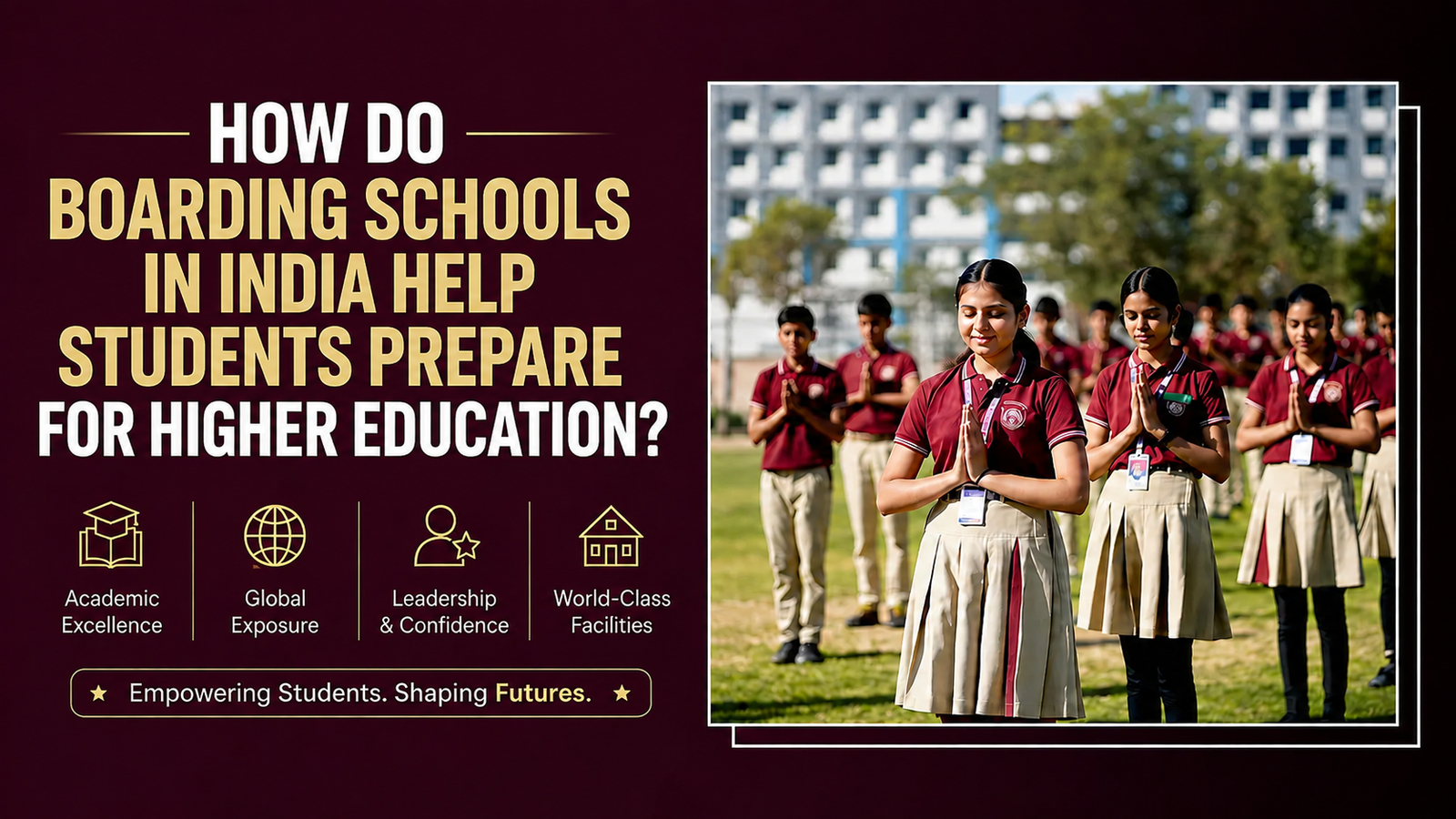
Choosing the right school is an important decision when parents want their child to be ready for future academic challenges. A Boarding School in India offers more than classroom-based learning by combining academics with structured routines, independent living, extracurricular activities, and personal development. These experiences can help students develop skills that are useful when they move into colleges and universities. From academic discipline to decision-making, residential education can create a learning environment focused on higher education preparation. Understanding how boarding schools support students can help parents make a more informed choice about their child’s educational journey.
How Do Boarding Schools Build Academic Discipline?
Academic discipline is one of the key aspects of structured residential education. In a boarding environment, students generally follow planned schedules that include classroom learning, study periods, recreational activities, meals, and rest. This routine encourages students to understand the importance of completing academic responsibilities on time.
A boarding school in India can provide an environment where regular study habits become part of everyday life. Supervised study hours can encourage students to revise lessons, complete assignments, and prepare for assessments without depending entirely on parental reminders.
Schools such as Modi School can demonstrate how a structured academic environment can encourage students to develop consistency in their studies. Regular interaction with teachers and mentors also gives students opportunities to identify areas where they need additional support.
This type of environment can be particularly valuable before college because higher education generally requires students to take greater responsibility for their academic progress. The disciplined environment followed in many boarding schools in India can therefore help students transition from school-level supervision toward greater academic responsibility.
How Does Boarding Life Build Independence?
One of the important boarding school benefits is the opportunity for students to gradually become more independent. Living away from home introduces children to responsibilities that may not be part of their everyday routine at a day school.
Students may learn to organize their belongings, manage their schedules, follow routines, communicate their needs, and make appropriate decisions. These everyday experiences can contribute to confidence and self-reliance.
A residential environment also gives students opportunities to solve small problems independently. Instead of immediately relying on parents, they may learn to approach teachers, mentors, house staff, or peers for appropriate guidance.
The residential approach followed by institutions such as Modi World School can encourage students to become comfortable with responsibility while still having access to a supportive school community. Living alongside peers can also help children learn cooperation, respect, and adaptability.
For students preparing for college, these abilities can be extremely useful. University life often requires young adults to manage their own schedules, responsibilities, social interactions, and academic commitments. Residential education in India can provide an early opportunity to develop these habits in a structured and supportive environment.
What Skills Do Students Develop for Higher Education?
1. Independent Learning
Independent learning helps students become more responsible for their academic progress. In a residential setting, students may receive academic guidance while also being encouraged to revise lessons, research topics, and complete assignments independently. This balance can help them gradually move away from constant supervision. The experience can be valuable for preparing students for higher education, where students are expected to understand concepts, manage coursework, and take greater ownership of their learning.
2. Critical Thinking and Problem-Solving
Higher education often requires students to analyze information rather than simply memorize it. Boarding education can encourage critical thinking through classroom discussions, projects, activities, and real-life problem-solving situations. Students may learn to evaluate different viewpoints, ask questions, and make reasoned decisions. These abilities can support academic performance at college and university level, particularly when students encounter complex subjects that require analysis, research, and logical thinking.
3. Communication Skills
Strong communication skills can help students participate effectively in academic and social environments. Living in a residential community gives students regular opportunities to communicate with teachers, mentors, roommates, classmates, and other members of the school community. Presentations, group projects, discussions, and extracurricular activities can further develop confidence in expressing ideas. These skills can become useful during college presentations, interviews, seminars, group assignments, and professional interactions.
4. Adaptability
Moving into higher education can involve adjusting to a new campus, different teaching styles, unfamiliar people, and greater independence. Boarding schools can introduce students to a structured residential environment before they enter university. Learning to adapt to changing situations, cooperate with peers, and manage unfamiliar experiences can make future transitions easier. This adaptability can also help students respond positively when academic expectations or personal responsibilities change.
5. Leadership and Responsibility
Leadership is not developed only through formal positions. Students can build leadership abilities by participating in sports teams, clubs, cultural activities, group projects, student responsibilities, and school events. Such opportunities can teach students how to communicate, coordinate with others, take responsibility, and handle challenges. These experiences can be useful in higher education, where students may participate in student organizations, academic teams, events, and collaborative projects.
Developing Time Management & Discipline
1. Following a Structured Daily Routine
A structured routine can help students understand how different responsibilities fit into their day. Academic classes, study hours, meals, sports, activities, and rest are generally organized within a planned schedule. Over time, students can become familiar with prioritizing tasks and using available time effectively. This habit can support college preparation in India, where students often need to balance lectures, assignments, examinations, activities, and personal responsibilities.
2. Managing Academic Deadlines
Meeting deadlines is an important part of both school and higher education. Boarding students can gradually learn to plan assignments, revision, projects, and examination preparation around fixed timelines. Regular routines can encourage them to avoid unnecessary delays and become more organized. When students enter college, these habits can help them handle multiple assignments and academic commitments without becoming overly dependent on reminders from parents or teachers.
3. Balancing Academics and Activities
Higher education is not limited to academics. Students may participate in sports, clubs, cultural programs, competitions, internships, and other activities. A residential school environment can teach students how to balance academic responsibilities with extracurricular interests. By learning to allocate time for study, recreation, physical activity, and rest, students can develop a more sustainable routine that supports both performance and personal well-being.
4. Building Consistent Study Habits
Consistency can be more valuable than last-minute preparation. Regular study periods can help students develop habits of revision and continuous learning. Instead of depending entirely on intensive preparation before examinations, students can become accustomed to reviewing concepts regularly. Such consistency can support better academic organization and make the transition to university-level coursework more manageable.
What Role Does Mentorship Play in Higher Education Preparation?
Mentorship can play an important role in helping students understand their academic strengths, interests, and future goals. In residential schools in India, students may have regular opportunities to interact with teachers, house mentors, academic coordinators, and other members of the school community.
A mentor can help a student recognize areas that require improvement and encourage better study habits. Regular conversations can also help students reflect on their performance and set realistic academic goals.
At Modi School, for example, a supportive academic environment can help students benefit from regular interaction with educators while working toward their academic and personal goals. Such guidance can become particularly useful as students approach senior classes and begin thinking about subjects, careers, competitive examinations, and higher education pathways.
Mentorship can also support personal development. Students may face academic pressure, changes in friendships, or challenges associated with growing independence. Having trusted adults available for guidance can help students approach these situations more confidently.
For university preparation for students, this combination of academic guidance and personal support can be valuable. It can help students develop the confidence to seek advice, ask questions, and make informed decisions about their future.
How Does a Boarding School in India Support University Readiness?
A Boarding School in India can support university readiness by combining academic learning with practical skills needed for independent student life. The preparation starts with creating an environment where students learn to manage their responsibilities while receiving appropriate guidance.
Academic support can help students strengthen subject knowledge and develop effective study techniques. At the same time, activities such as sports, debates, clubs, cultural programs, projects, and competitions can encourage communication, teamwork, leadership, and confidence.
The learning environment at Modi World School can be viewed as an example of how academic development and broader student experiences can work together. Residential life can give students opportunities to interact with peers, manage routines, participate in activities, and become more comfortable with responsibility.
Another important aspect is exposure to goal-oriented learning. Students who understand their academic interests early can gradually explore potential courses and career pathways. Schools can support this process through counseling, mentoring, academic discussions, and exposure to different fields.
So, how do boarding schools prepare students for college? They can provide a combination of academic discipline, independent learning, time management, social skills, and personal responsibility. Together, these experiences can make students better prepared for the expectations of higher education.
Frequently Asked Questions
How does boarding school help with higher education?
Boarding school can help students develop academic discipline, independence, time management, communication, and problem-solving skills. These abilities can support students as they transition into colleges and universities where they are expected to manage greater academic and personal responsibility.
Do boarding schools prepare students for university?
Yes, boarding schools in India can help prepare students for university by combining structured academic routines with residential experiences. Students can develop independent learning habits, adaptability, communication skills, and responsibility that may be useful in university life.
What skills do students learn at boarding schools?
Students can develop independent learning, time management, communication, teamwork, leadership, problem-solving, adaptability, and personal responsibility. These skills can support both academic performance and personal growth during higher education.
How does boarding school build student independence?
Residential education gives students opportunities to manage daily routines, organize responsibilities, communicate their needs, and make appropriate decisions. With guidance from teachers and mentors, students can gradually become more confident in handling responsibilities independently.
How do boarding schools improve academic skills?
Boarding schools can support academic development through structured study schedules, teacher guidance, supervised learning, regular assessments, revision routines, and opportunities for collaborative learning. A consistent academic environment can encourage students to develop better study habits.
Conclusion
Preparing for higher education involves much more than achieving good marks. Students also need independence, discipline, communication, adaptability, time management, and the confidence to make responsible decisions. A structured boarding education in India can provide opportunities to develop these qualities alongside academic knowledge.
For parents exploring boarding schools in India for higher education, it is important to look beyond academics and consider teaching quality, mentoring, student support, residential facilities, extracurricular opportunities, and the overall learning environment.
A school that combines these elements can help students gradually become more confident and responsible learners who are better prepared for the expectations of college and university life. Modi World School – Wisdom City aims to provide an environment where academic learning, personal development, independence, and future readiness come together as part of a student’s overall educational journey.
📞 Admissions Open! Enroll now to shape your child’s bright future with us.
📲 Call: +91-7240372409
📍 Address: Modi World School, Wisdom City, Near Khemi Shakti Temple, Samaspur Road, Jhunjhunu, Rajasthan – 333001
#ModiWorldSchool #CBSESchoolInIndia #BestBoardingSchool #TopBoardingSchool #BestSchoolInIndia #CBSEBoardingSchool #AdmissionsOpen #QualityEducation #BoardingSchoolIndia #ResidentialSchool #FutureReadyEducation #BoardingSchoolLife #TopCBSERajasthan #ModernEducation #CBSEIndia #SchoolAdmissions