

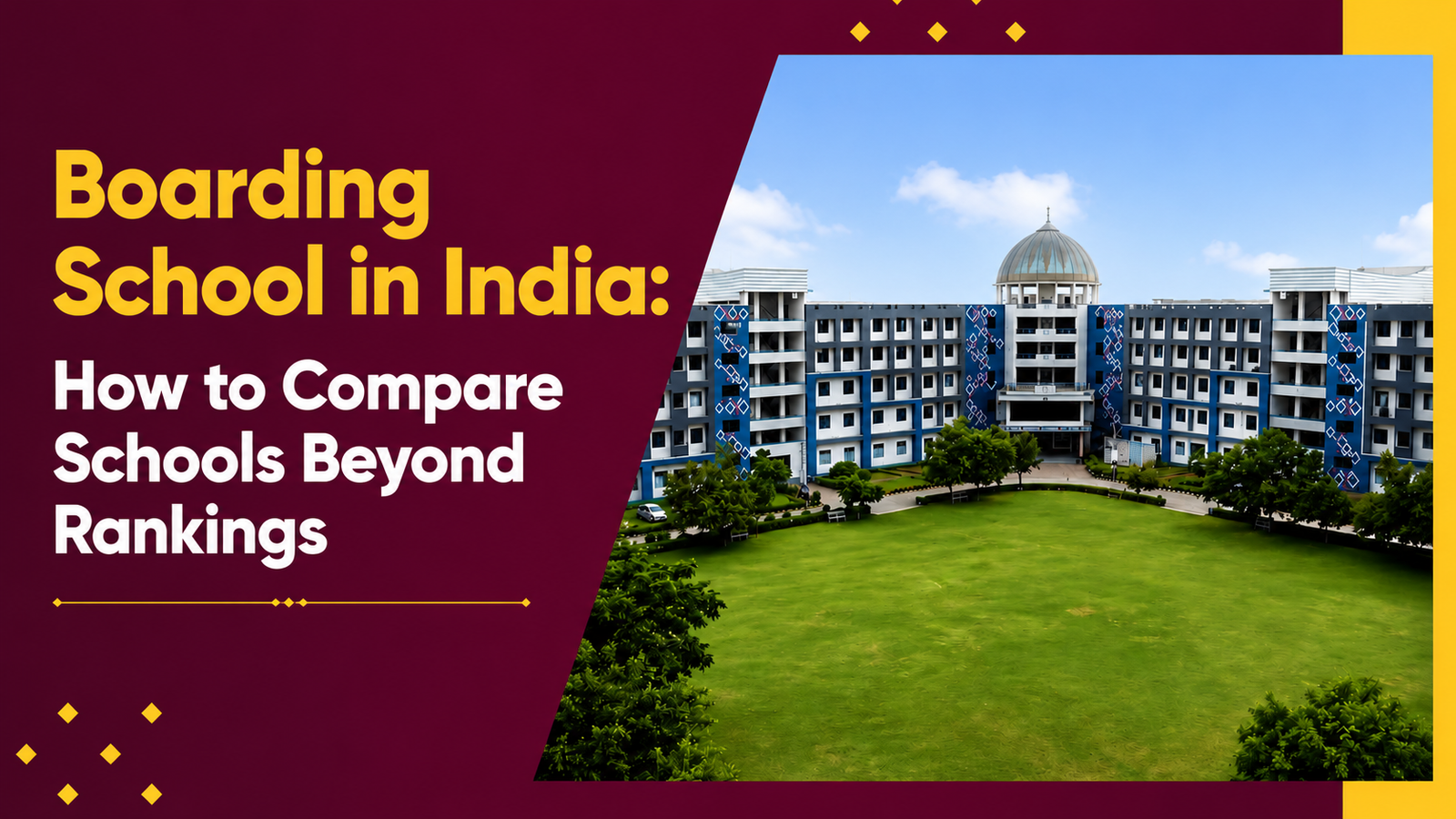
Choosing the right Boarding School in India is one of the most important decisions parents make for their child’s future. While many families begin their search by checking rankings, those rankings alone do not reveal everything about a school’s quality, environment, or suitability. Every child has unique learning needs, interests, and personality traits, making it essential to evaluate a school from multiple perspectives.
If you are searching for the Best Boarding School in India, you should look beyond reputation and focus on factors such as academic excellence, student safety, faculty experience, hostel facilities, extracurricular opportunities, and emotional support. A thoughtful Boarding School Comparison helps parents make informed decisions instead of relying solely on advertisements or rankings.
This Boarding School Selection Guide explains how to compare boarding schools in India, the factors to consider before choosing a boarding school, and how to identify the best environment where your child can learn, grow, and thrive.
How to Compare a Boarding School in India?
Many parents wonder, “How do you compare boarding schools in India?” The answer lies in evaluating every aspect of a school instead of focusing on a single ranking or popularity list. A proper Boarding School Comparison involves understanding how the institution supports students academically, emotionally, socially, and physically.
Start by reviewing the school’s curriculum, teaching methodology, teacher qualifications, and academic results. The Best Boarding School in India is one that encourages curiosity, creativity, and critical thinking instead of emphasizing only examination scores.
Next, examine hostel facilities, food quality, medical assistance, hygiene standards, and campus security. These aspects directly affect a child’s daily life and overall well-being.
Parents should also evaluate sports facilities, clubs, arts programs, leadership opportunities, career guidance, and personality development initiatives. These experiences help students become confident and independent individuals.
Another important step when you choose a Boarding School in India is to interact with teachers, current students, and alumni whenever possible. Reading parent reviews and visiting the campus can provide valuable insights that brochures often cannot.
Understanding what to compare before choosing a boarding school helps families make decisions based on long-term value rather than short-term popularity.
Why Choosing a Boarding School Requires More Than Rankings?
Many families believe that higher rankings automatically indicate better education. However, are school rankings enough to choose a boarding school? The answer is no. Rankings usually measure limited parameters such as academic performance or public reputation, but they rarely reflect the complete student experience.
When looking for the Best Boarding School in India, parents should remember that every child learns differently. A school that ranks highly may not necessarily match your child’s learning style, interests, emotional needs, or career aspirations.
One of the most important factors to consider before choosing a boarding school is whether the institution creates a supportive and inclusive environment. Students spend most of their time on campus, making friendships, interacting with teachers, and developing life skills. These experiences influence their confidence, communication abilities, and emotional well-being.
Parents should also evaluate student safety, teacher-student interaction, hostel supervision, mental wellness support, extracurricular participation, and overall campus culture. These factors often contribute more to a child’s development than a ranking alone.
Instead of asking only which institution has the highest position, ask, “How can parents evaluate a boarding school’s quality?” A balanced evaluation provides a clearer picture and helps families make decisions that truly benefit their child’s future.
How Can Parents Find the Right School for Their Child?
Choosing the Best boarding school for my child in India is not about selecting the most popular institution—it is about finding a school that aligns with your child’s personality, interests, strengths, and future goals. Every child has different learning styles and emotional needs, so parents should avoid making decisions based only on advertisements or rankings.
When considering Boarding School Admission in India, begin by identifying your child’s academic expectations, extracurricular interests, and preferred learning environment. Some students thrive in structured academic settings, while others perform better in schools that emphasize creativity, sports, leadership, and experiential learning.
If you are wondering how to choose the right boarding school, arrange a campus visit whenever possible. Observe classroom interactions, hostel facilities, dining areas, sports infrastructure, and the overall atmosphere. Speaking with teachers, students, and even parents of current students can provide practical insights that brochures cannot.
Parents should also assess student-teacher ratios, academic support systems, career counselling, discipline policies, and communication between the school and families. These aspects help answer an important question: How do I know if a boarding school is right for my child?
A thoughtful Boarding School Selection Guide always focuses on the child’s long-term happiness, confidence, and holistic development rather than reputation alone.
Facilities, Sports & Overall Development
1. Academic Infrastructure
A quality Boarding School in India should offer modern classrooms, science laboratories, computer labs, well-equipped libraries, and interactive learning resources. Strong academic infrastructure supports conceptual understanding, innovation, and research-based learning. Parents should also evaluate the school’s teaching methodology, availability of subject experts, and personalized academic support to ensure students receive a well-rounded education that prepares them for higher studies and future careers.
2. Hostel Facilities
Comfortable and secure hostel accommodation plays a significant role in a student’s overall experience. While comparing schools, parents should assess room cleanliness, hygiene standards, nutritious meals, laundry services, recreational spaces, and hostel supervision. A well-managed residential environment helps students become disciplined, independent, and emotionally comfortable while living away from home, making it one of the key factors to consider before choosing a boarding school.
3. Sports Facilities
Sports contribute to physical fitness, teamwork, leadership, and discipline. The Best Boarding School in India should provide opportunities for students to participate in indoor and outdoor sports such as football, cricket, basketball, swimming, athletics, badminton, and yoga. Professional coaching, regular competitions, and fitness programs encourage students to maintain a healthy lifestyle while developing resilience, confidence, and sportsmanship.
4. Student Safety
Many parents ask, How important is student safety in a boarding school? The answer is simple—it is one of the most critical aspects of school selection. Parents should evaluate CCTV surveillance, trained security personnel, visitor management systems, emergency response procedures, anti-bullying policies, and hostel wardens. A secure environment enables students to focus on academics and personal growth with confidence and peace of mind.
5. Medical Care & Wellness
Reliable healthcare facilities are essential in every Boarding School in India. Parents should check whether the campus has qualified medical staff, first-aid facilities, emergency care arrangements, routine health check-ups, and access to nearby hospitals. Schools that prioritize both physical and mental well-being create a healthier learning environment where students feel supported throughout their academic journey.
6. Co-curricular Activities
Education extends far beyond textbooks. Schools should encourage participation in music, dance, theatre, debates, public speaking, robotics, coding, art, photography, community service, and leadership programs. These activities help students discover their interests, improve communication skills, build creativity, and develop self-confidence. A balanced curriculum ensures students achieve both academic excellence and personal growth.
7. Technology & Learning Resources
Modern education requires access to advanced learning tools. While conducting a Boarding School Comparison, parents should evaluate smart classrooms, digital libraries, STEM labs, coding programs, AI-based learning resources, and internet-enabled research facilities. Technology enhances classroom engagement, encourages collaborative learning, and prepares students for future academic and professional challenges in an increasingly digital world.
8. Emotional Well-being & Mentorship
Moving away from home can be emotionally challenging for children. A good boarding school provides counselling services, experienced mentors, supportive teachers, and regular parent-school communication. Emotional guidance helps students adjust to residential life, manage academic pressure, build healthy relationships, and develop resilience. A caring environment is just as important as strong academics when choosing the right boarding school.
Boarding School Comparison Checklist for Parents
Before making the final decision, parents should create a practical checklist to compare every Boarding School in India on the same parameters. This approach makes the selection process objective and helps avoid decisions based solely on reputation or rankings.
Begin by evaluating the curriculum, academic performance, teacher qualifications, and student-teacher ratio. Next, review hostel facilities, hygiene standards, nutritious meals, healthcare services, and campus security. These are among the most important factors to consider before choosing a boarding school.
Parents should also compare sports infrastructure, co-curricular activities, leadership opportunities, career guidance, and life skills programs. A school that supports holistic development prepares students for success both inside and outside the classroom.
Another important aspect of Boarding School Comparison is communication. Find out how frequently parents receive academic updates, whether regular parent-teacher interactions are conducted, and how the school handles student concerns.
Finally, visit the campus whenever possible. Observe the classrooms, hostel environment, dining facilities, and interaction between students and teachers. A personal visit often answers questions that brochures and websites cannot.
Following this Boarding School Selection Guide will help you choose a Boarding School in India that matches your child’s academic goals, personal interests, and overall development needs.
Frequently Asked Questions (FAQs)
1. How do you compare boarding schools in India?
The best way to compare boarding schools in India is by evaluating academics, faculty, hostel facilities, student safety, sports infrastructure, extracurricular activities, healthcare, career guidance, and campus culture. A comprehensive comparison provides a much clearer picture than relying only on rankings.
2. Are school rankings enough to choose a boarding school?
No. Rankings are only one factor and should not be the sole basis for your decision. Parents should also consider student well-being, academic support, safety, residential facilities, extracurricular opportunities, and overall learning environment before selecting a Boarding School in India.
3. What factors matter more than school rankings?
Several factors are equally or even more important than rankings, including experienced teachers, personalized learning, hostel quality, student safety, emotional support, sports facilities, leadership opportunities, and career counselling. These aspects directly influence a child’s overall growth and development.
4. How can parents evaluate a boarding school’s quality?
Parents can evaluate a school’s quality by visiting the campus, interacting with teachers, speaking to current students and parents, reviewing academic results, checking infrastructure, and understanding the school’s values, teaching methodology, and student support systems.
5. What facilities should a boarding school offer?
A quality Boarding School in India should provide modern classrooms, science and computer laboratories, well-equipped libraries, comfortable hostels, nutritious dining facilities, sports complexes, healthcare services, counselling support, and opportunities for co-curricular and leadership development.
6. How important is student safety in a boarding school?
Student safety is one of the most important considerations. Parents should check for CCTV surveillance, trained security staff, hostel supervision, emergency response systems, medical support, and anti-bullying policies to ensure a secure residential environment.
7. How do I know if a boarding school is right for my child?
The right school is one that matches your child’s academic abilities, personality, interests, and long-term goals. Visiting the campus, understanding the school’s culture, and assessing its overall environment can help parents make an informed decision.
8. What should parents compare before choosing a boarding school?
Parents should compare academics, faculty, hostel facilities, food quality, healthcare, student safety, sports infrastructure, extracurricular activities, discipline, communication with parents, and career guidance before making a final decision.
9. How early should parents begin the boarding school admission process?
It is advisable to begin researching schools at least 6–12 months before Boarding School Admission in India. This gives parents enough time to compare schools, visit campuses, complete documentation, and prepare their child for the transition.
10. Why is holistic development important in a boarding school?
Holistic development helps students build confidence, leadership, communication, teamwork, creativity, and problem-solving abilities alongside academic excellence. These skills prepare children for higher education, future careers, and life beyond the classroom.
Conclusion
Selecting the right Boarding School in India is a decision that goes far beyond checking rankings or popularity. Parents should carefully evaluate academics, faculty, student safety, hostel facilities, sports infrastructure, co-curricular opportunities, emotional support, and overall campus culture before making a choice. A well-planned Boarding School Comparison helps families identify an institution that aligns with their child’s learning style, personality, and future aspirations.
If you have been wondering how to choose the right boarding school or searching for the Best boarding school for my child in India, focusing on holistic development instead of rankings alone will lead to a more informed decision. By following this Boarding School Selection Guide, parents can confidently choose a school that nurtures academic excellence as well as life skills.
For families seeking a modern residential learning environment that emphasizes quality education, character development, and all-round growth, Modi World School – Wisdom City is a valuable option to explore during your Boarding School Admission in India journey.
📞 Admissions Open! Enroll now to shape your child’s bright future with us.
📲 Call: +91-7240372409
📍 Address: Modi World School, Wisdom City, Near Khemi Shakti Temple, Samaspur Road, Jhunjhunu, Rajasthan – 333001
#ModiWorldSchool #CBSESchoolInIndia #BestBoardingSchool #TopBoardingSchool #BestSchoolInIndia #CBSEBoardingSchool #AdmissionsOpen #QualityEducation #BoardingSchoolIndia #ResidentialSchool #FutureReadyEducation #BoardingSchoolLife #TopCBSERajasthan #ModernEducation #CBSEIndia #SchoolAdmissions